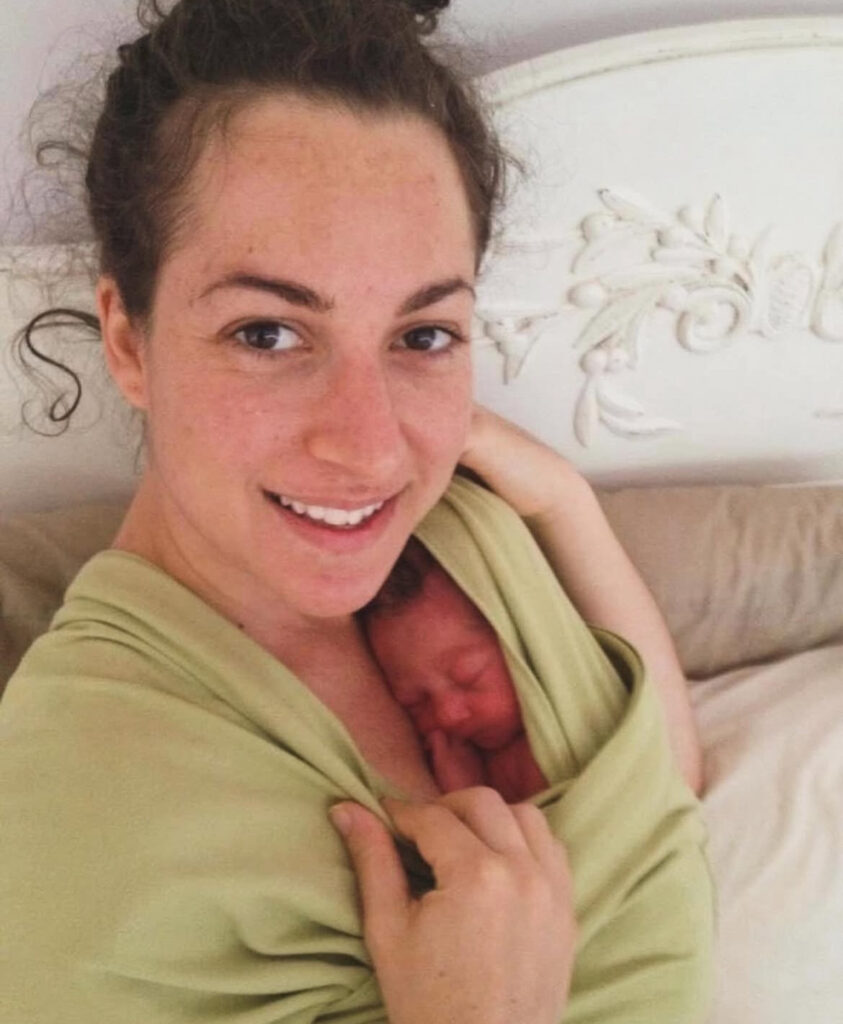
Melanie Jackson’s journey into motherhood began whilst she was completing her PhD on “Birthing Outside the System” – research that would prove prophetic for her own birth experiences. As an established home birth midwife by the time she conceived her first baby, choosing to birth at home felt like “a really common sense decision.” However, her first pregnancy threw some unexpected challenges her way.
Early Pregnancy Challenges and Intuitive Knowing
Melanie’s first pregnancy was marked by significant bleeding episodes before 15 weeks. “I had three bleeds during the pregnancy before 15 weeks, and they were quite significant bleeds that were more than I had ever had my clients report to me,” she recalls. Despite the concerning nature of these bleeds, ultrasounds revealed they weren’t coming from within the uterus, and Melanie made the informed decision not to pursue further investigations.
What’s particularly fascinating is Melanie’s strong intuition about her baby’s timing. Despite being told that “first time babies never come early,” she had an overwhelming sense her baby would arrive before 37 weeks. “I had a sense, for some reason, I can’t explain what it was, but I had a sense that my baby was going to be an early baby. So much so that I’d made preparations, like I’d gotten a big long sling in order to do kangaroo care.”
The Marathon Labour
At 36 weeks and two days, labour began in an unexpected way – whilst Melanie was praying for a friend in India who had also gone into labour. “I woke up in the middle of the night getting contractions myself, and I thought, what a good opportunity to pray for my friend again… And then the contractions just continued through the night.”
What followed was a 36-hour labour that challenged every expectation. “I remember being bored. I remember at one point saying, my gosh, this is so boring. You do a contraction and then you’re like, all right, well let’s do another one.” The labour was characterised by long periods of stopping and starting, with Melanie maintaining her determination to birth at home throughout.
Innovative Solutions and Acupuncture
When labour stalled completely after Melanie reached full dilation, her birth team called in an acupuncturist. The treatment was remarkably effective: “She put these needles kind of over my tailbone… and there was this sudden incredible movement of the baby. And I just made this noise of like, oh, like, it just felt like a baby clunked into my pelvis.”
The acupuncturist’s most memorable intervention came when she suggested putting “a needle in your perineum.” Despite the unusual nature of this treatment, Melanie consented, demonstrating her commitment to birthing at home: “I was like, well, what choice do I have? I mean, I’m not gonna go to hospital.”
A Tiny But Mighty Baby
Charlie was born weighing just 2.3 kilograms, requiring careful monitoring at home. “I knew he needed to stay warm ’cause early babies have trouble staying warm. He needed to be fed regularly ’cause they have trouble maintaining their blood sugar levels.” Melanie’s confidence as both a midwife and new mother shone through: “I was fully prepared that if he didn’t adapt well to life, that I would transfer to hospital… But he did. He was fine.”
The Euphoric Second Birth
Four years later, Melanie’s second birth was a completely different experience. After a full-term pregnancy, labour began during a family dinner and progressed rapidly. “By the time she started getting him for bed, I was getting ready for him, ready for bed. I was holding onto the doorframe trying to explain to her where his pajamas are.”
The birth itself was marked by an unexpected emotional response: “There was a point where she was really low down, super tight on my perineum… And I just started laughing hysterically. Like a psycho just laughing and giggling.” This euphoric response highlights how different each birth can be, even for the same woman.
Professional Insights and The Great Birth Rebellion
Melanie’s academic work exploring why women choose to birth outside conventional maternity care revealed important insights: “What it revealed was the real shortfalls in maternity care and then why women make what look like more extreme decisions like free birth or having a home birth with risk factors… it turned out that really women will always choose what they believe is best and safest.”
This research foundation has informed her podcast, The Great Birth Rebellion, which now receives “about 50,000 downloads a week.” The podcast’s success stems from its unique approach: “I wanted to do something that was still as valuable and a learning opportunity, but yeah, very particular” – focusing on single topics with evidence-based information rather than duplicating existing birth story formats.
Breastfeeding Realities
Despite her professional experience, Melanie found breastfeeding challenging with both babies. “I was confident that I could do it and that I would make enough milk and all of that, but it was probably still 12 weeks of discomfort… I felt like I needed to concentrate every feed for like the first 12 weeks.”
Her honest reflection provides valuable perspective: “I could see why women would sort of go forget it, because it’s tiring… if I didn’t have the support of my husband… I don’t know that I would have been able to sustain it.”
Key Takeaways for Expectant Parents
Melanie’s story offers several important insights for those planning their births:
- Having experienced, supportive care providers who respect your choices is crucial
- Alternative therapies like acupuncture can be valuable tools during labour
- Each birth is unique, even for the same woman
- Professional knowledge doesn’t eliminate the learning curve of new parenthood
- Realistic expectations about breastfeeding challenges are important
The Importance of Choice and Support
Throughout both her births, Melanie emphasised the importance of having care providers who supported her choices rather than imposing restrictions. “At no point did everyone like go, Mel, this is ridiculous. We have to do something here. They all were just like, right. She wants to keep going. That’s what we’re doing.”
This support, combined with her own “mental toughness and grit,” enabled her to achieve the births she wanted despite unexpected challenges. Her story demonstrates that with the right preparation, support team, and mindset, women can navigate even complex birth experiences whilst maintaining agency over their choices.
Melanie’s journey from midwife to mother to podcast host illustrates how personal birth experiences can deepen professional understanding and drive advocacy for better maternity care options. Her work continues to support thousands of families in making informed decisions about their births, proving that sharing our stories – both the challenging and euphoric moments – creates ripples of positive change in birth culture.

Topics Discussed
36-hour labour, acupuncture in labour, Two home births, Midwife
-
The Birth Class
$249.00The empowering online childbirth education program that will help you confidently prepare for birth.


