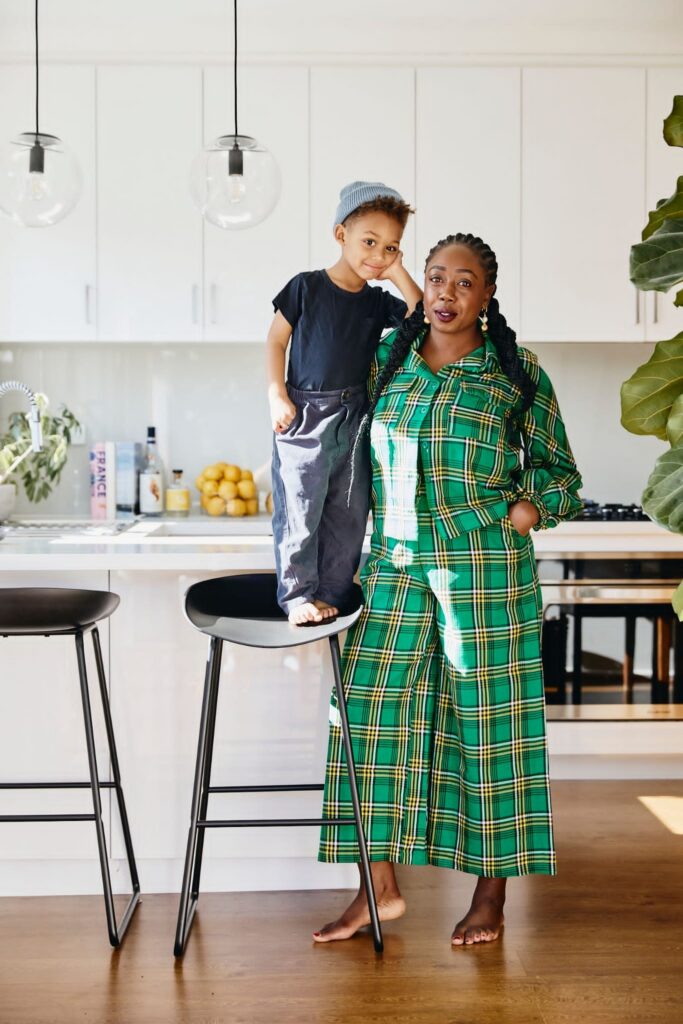
Fatuma’s story is one of profound cultural reconnection, medical advocacy, and the power of trusting your instincts as a mother. Her experience highlights the importance of having strong advocates in the birthing room and the beautiful intersection between Western medicine and traditional African birthing practices. This episode will resonate deeply with anyone who has faced difficult decisions during pregnancy or felt the need to advocate for themselves in medical settings.
Show Notes
Fatuma’s journey to motherhood began unexpectedly when she discovered she was pregnant just weeks after her wedding. “I got married in November and then I found out I was pregnant at the end of December. So it was quite quick and I wasn’t trying,” she recalls. What she initially thought would be a romantic first year of marriage quickly transformed into something entirely different.
Early Pregnancy Complications
The first sign that something wasn’t quite right came in the form of mysterious symptoms. “I woke up one day with a bit of a weird lump on my neck,” Fatuma explains. When she visited her GP, his dismissive response – suggesting it was “a bit of an African kind of vibe” – would later prove to be dangerously inadequate care.
What followed were frightening episodes where Fatuma experienced stroke-like symptoms: “I was convinced that my heart was going really, really fast and I was having a stroke.” After multiple emergency department visits, she was eventually diagnosed with hemiplegic migraines triggered by pregnancy hormones. “The doctor said, you’ve got hemiplegic migraines, which is like the signal to your brain through the oestrogen is what’s happening to your body. And it happens the whole nine months until you give birth.”
The Toxoplasmosis Diagnosis
At 22 weeks pregnant, a more thorough medical team discovered that the mysterious neck lump from early pregnancy was actually inflammation from toxoplasmosis – an infection Fatuma likely contracted from a cat café during her honeymoon in Japan. “When I was there, I went to a cat café. And to be honest, I’m not really a cat person… But for some reason I went, I was like, oh, this is just part of the culture.”
The diagnosis came with devastating news. “The doctors advised that I should not have the baby. And even though it was 22 weeks, they were like, I think you should terminate this pregnancy.” The potential complications were severe.
Making Difficult Decisions
Faced with this impossible choice, Fatuma found herself navigating medical recommendations whilst deeply connected to her pregnancy. “When you get to that 20 week, 25, 26, you’re really deeply connected. And also because I had to really start to understand what I was going to expose myself to… I was getting a scan every week. So the connection is really strong.”
Her decision-making process was complicated by well-meaning but overwhelming input from family and friends. “Having everyone’s opinion was actually really terrible… But at the end of the day, no offence to my husband even, I knew that I was going to have to deal with the majority of it.”
Cultural Reconnection and Healing
This challenging period led Fatuma to reconnect deeply with her Angolan heritage and traditional birthing practices. “I had to really dig down to what other people had done thousands and thousands of years, women that looked like me, what they went to and what their practices were. And it was quite a beautiful journey.”
She describes feeling profoundly connected to the natural world during this time: “I remember when I was having the baby, I felt the most mammal-like. I didn’t actually really feel very human… my body here is a vessel to keep something else alive.”
Advocating in the Medical System
Fatuma’s experience highlights the critical importance of having strong advocates during medical care, particularly for women of colour. She was acutely aware of the statistics around maternal outcomes: “I know the statistics, I know what’s happening. This is how I want it to happen.”
Her preparation was thorough: “I had my sister there to advocate for me from a medical perspective. I want her to call anyone in our team that if things are not going well, I want them to be the people to consult from a culturally safe space for me.”
This advocacy proved essential during labour when the anaesthetist initially refused to provide an epidural due to her medical complications. “He was like, you’ve got so many complications. I just don’t think that you should add anything extra to it… I looked at my sister and I was like, it’s not up to Ryan. I said that I want that.”
The Birth Experience
At 37 weeks, Fatuma was induced at Mercy Hospital. Despite the medical complexity of her pregnancy, the birth itself became a celebration. “I had my playlist, many playlists… My sister arrived, my other sister had like three sisters in the waiting room.”
The transformation from medical crisis to joyful birth was remarkable: “It went from like a very [medical situation] to their medical stuff that they had to definitely check. But then as soon as they did all the tests… then they brought him to me and like all of my family came in.”
Postpartum and Cultural Practices
Following Arlo’s birth, Fatuma embraced traditional postpartum practices. “I definitely went into postpartum rituals… I had a friend of a friend that started a really beautiful [practice] for postpartum practices… I definitely went down like full African mum vibes.”
The test results confirmed what her instincts had told her: “They’re like, no, no toxoplasmosis… And maybe that was also the elation that I felt. And also I thought, my God, imagine if I had terminated the pregnancy.”
Professional Transformation
This profound experience led Fatuma to leave her high-pressure corporate job and start her own business, Ukoo, a family skincare brand that celebrates cultural heritage and modern motherhood. “When I thought about this brand, I thought about what are those elements? What can we do to kind of uplift that modern family?”
The brand name itself reflects her journey: “Ukoo, which is a Swahili word for the ancestral responsibility of storytelling… the person that tells the story, they’re in charge of keeping the generations going and informing them each time.”

Topics Discussed
epidural pain relief, Induction birth
Episode Sponsor
Today’s episode is brought to you by UKOO – the Australian-made, female-run family body care brand that celebrates the beautiful truth that caring for each other is what makes us family.
At UKOO, they understand that family isn’t just parents and children – it’s the aunties, uncles, nannies, friends, and wider community that makes up our village. That’s why their gentle, clinically tested range is designed for everyone, from toddlers and teenagers to parents and grandparents.
Each thoughtfully crafted product features pre and postbiotics to support healthy, balanced skin across all ages. Made right here in Melbourne, UKOO believes that caring rituals, like the stories we share, are meant to be passed down through generations.
Ready to embrace generational care for your family? Visit UKOO today and use code “ABS15” for 15% off their entire range.
-
Birth Meditations
$49.00Narrated by Sophie Walker, these soothing and informative meditations help you feel supported and confident around birth.


